I entered an internal hackathon last summer as a one-person team. 275 people, 35 solutions, most groups running two to five deep.
I built a customer satisfaction agent: something that reads customer comments about our web experience, works out what’s going wrong, and routes it into a plan someone could act on. Microsoft Copilot, a few Power Automate workflows, and enough data processing to turn messy verbatims into something a business unit could use. It took second place.
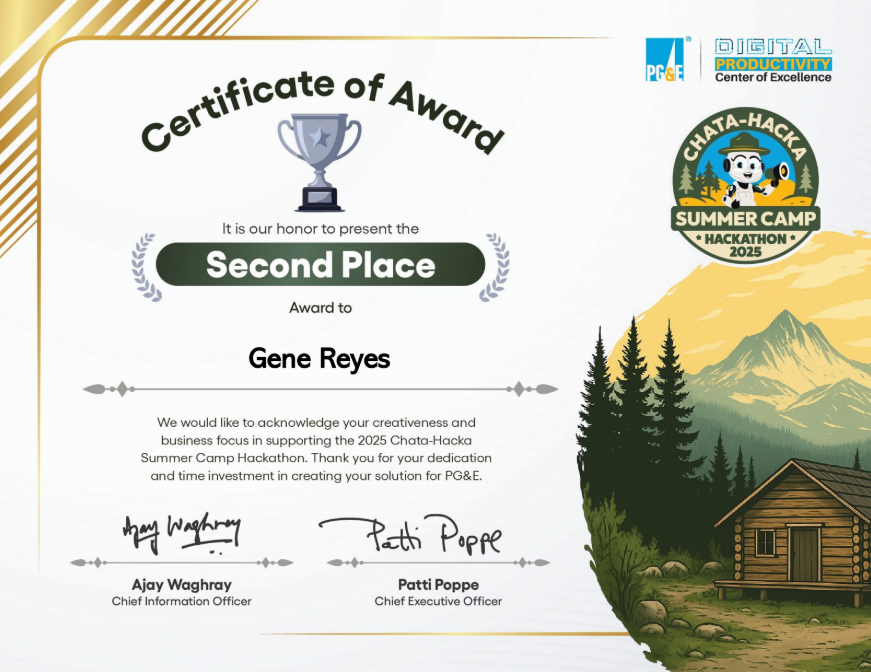
The build wasn’t the interesting part. Plenty of the other 34 solutions were more sophisticated. What I had was a number I could defend: roughly 520 hours saved annually, under assumptions I’d stress-tested before anyone in the room could. That’s the same problem I keep running into in most of the reporting work I’ve done. Someone has a decision to make and no clean way to make it, and the tool matters less than whether the person looking at it can act.
The part that stuck with me happened between rounds. A judge gave me a specific note after the first pitch. I made finals not expecting to, and in the gap I went back and built the change. When I got in front of the second panel, I opened by telling them their predecessor’s feedback was already in the demo.
I don’t know how much that mattered to the score. But it’s the piece I’d repeat.
Doing all of it alone was the other thing. No one to hand the deck to, no one to own the model while I owned the pitch. I wouldn’t recommend it, and second place still feels a little like first loser. Next time I’d bring a couple of all-stars instead of running the whole thing myself. But it made one thing obvious: the concept and the case for it took more of my time than the build did, and that ratio felt about right.
That’s the part I took with me. Not that the agent worked, plenty of things work, but that the hardest question all week was whether it should exist. I’ve been building smaller things since, mostly to keep asking that question in lower-stakes rooms. More to come.